Hey everyone, it’s [Your Name], and if you’re in the aggregate, mining, or recycling game, I bet you’ve geeked out over crusher rotors a time or two. I’m a rotor supplier, so I live and breathe these bad boys—and one question comes up at least once a week from new and repeat customers alike: “What’s the right power requirement for my crusher rotor?” It’s not a one-size-fits-all answer, but let’s break this down like we’re talking shop on a jobsite break, no stuffy engineering jargon that makes your eyes glaze over. Crusher Rotor

First off, let’s cut through the confusion: the power for a crusher rotor isn’t just pulled out of thin air. It’s the total energy needed to spin that rotor fast enough, plus energy to actually crush the material you’re running. Let’s start with the basics. Rotor power splits into two main parts: the power to overcome friction (from bearings, seals, and the material itself) and the power for crushing the feed. I’ve seen way too many guys undersize their motors because they only focused on crushing power, and then they’re stuck tripping breakers or wearing out parts way too fast. Oversize? That’s a waste of cash on a motor you don’t need, so getting this mix right is make-or-break.
Let’s talk about material first, because that’s the biggest variable. You don’t need the same power to crush soft limestone as you do to churn up hard granite, right? Limestone’s compressive strength is around 200 MPa, while granite can hit 350 MPa or higher. Then there’s recycling material—concrete has rebar in it, which is abrasive and takes extra force to shear. And if you’re crushing big, chunky feed (say, 3-foot boulders), that’s way more power than 6-inch gravel. I had a customer last year who tried to run concrete rebar feed through a rotor built for limestone; his motor was only 150 hp, and it died in 4 hours. Switched to a 250 hp rotor-matched setup, and he’s run 120 tons a day for 6 months no issues. That’s the material factor in action.
Next, rotor specs themselves. The bigger the rotor diameter, the more power you need. A rotor with a 6-foot diameter needs way more oomph than a 3-foot one, because it’s moving more material and requires higher torque. Rotor speed matters too—higher rotational speed means more impact force, so that bumps up power. But wait, there’s a sweet spot here: run a rotor too fast, and you’re wasting power on unnecessary spin, plus you’ll get more fines than you want. Too slow, and you can’t break the material efficiently. Our engineering team tests every rotor we sell to nail that speed-power balance, so you don’t have to guess. Also, the number and shape of the hammers (if it’s an impact rotor) or the teeth (for a jaw or cone rotor) changes power needs. Sharp, well-shaped hammers cut through material easier, so they take less power than dull, worn ones. That’s why we recommend regular hammer replacement, not just when your output drops.
Then there’s the efficiency piece. No rotor is 100% efficient—some power is lost to heat, friction in bearings, and vibration. A lot of guys forget that. If your rotor is built with cheap bearings or has poor alignment, you’ll be wasting 15-20% of your power just to spin the thing. When we build our rotors, we use premium tapered roller bearings and precision alignment, so we keep efficiency above 90%—that means every hp you pay for goes toward crushing, not wasted on friction. I can’t tell you how many times a customer has swapped a cheap rotor for one of ours and kept the same motor but doubled their output. That’s efficiency working for you.
Let’s throw in a quick example to make this real. Say you’re crushing 200 MPa limestone at 50 tons per hour. Our engineering calculator would do the math: crushing power needed is around 12 hp per 10 tons per hour, so that’s 60 hp for crushing. Friction and efficiency losses add another 15 hp, so total power is around 75 hp. But if you’re crushing 350 MPa granite at the same rate, that jumps to 18 hp per 10 tons, so 90 hp for crushing, plus another 20 hp for losses, so 110 hp total. That’s a big difference, and it all ties back to what you’re actually running.
Wait, also—variable frequency drives (VFDs) matter here, and I’m seeing more customers use these. A VFD lets you adjust rotor speed based on feed size and hardness, so you only use the power you need, not a fixed amount. For example, if your feed is small soft rock, you can slow the rotor down and cut power use by 20% without losing output. It’s a game-changer for energy costs, which is a huge line item for most operations. We work with customers to match their VFD to their rotor, so they get that flexibility.
Now, the mistakes I see all the time. First, matching power only to motor size, not rotor design. A 100 hp motor works great for a small rotor, but slap it on a large, heavy-duty rotor for hard rock, and you’re asking for trouble. Second, ignoring wear—dull hammers or worn rotor components increase power needs over time, so if you’re suddenly using more power than you were 6 months ago, it’s probably time to service or replace parts. Third, not accounting for feed moisture. Wet material is stickier, so it clings to the rotor and increases friction. If you run wet clay through your rotor without adjusting power, you’ll overload the motor.
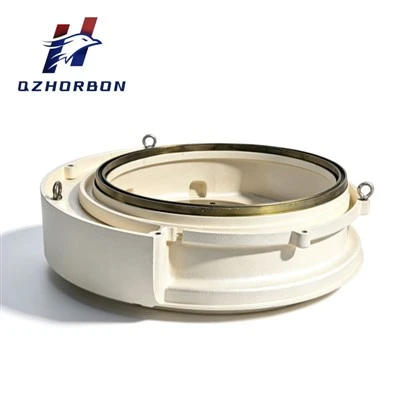
Here’s the thing: I’m not an engineer who hides behind formulas. I’ve been around crushers for 12 years, and I can tell you that the best way to get the right power for your rotor is to give us the details of what you’re crushing, the feed size, and your hourly output needs. We don’t just sell a rotor and leave you hanging. We’ll walk you through the power calculation, make sure your motor is sized correctly, and even help with VFD matching if that’s what you need. Last month, a guy from a recycling yard called, said he was running 180 hp and still struggling with rebar; we sent him a spec sheet, he upped to 250 hp matched to our impact rotor, and now he’s running 220 tons of concrete a day with zero motor trips. That’s the payoff.
Crusher Frame I know a lot of suppliers will just sell you the biggest rotor they can, but that’s not right. I’d rather you have a setup that’s efficient, doesn’t break down, and saves you cash on power and repairs long-term. If you’re planning a new crusher build, retrofitting an old rotor, or just tired of your current setup eating power, hit me up. We can talk through your specific application, no sales pitch, just honest info on what you need.
References
- Liming, R. W. (2012). Mineral Processing Technology: An Introduction to the Practical Aspects of Ore Treatment and Mineral Recovery. Elsevier.
- Spitz, H. B., & Auffret, P. (2015). Aggregates: Crushed Stone, Sand, and Gravel. John Wiley & Sons.
- Machinery Lubrication Magazine. (2021). "Power Requirements for Impact Crushers." Industrial Lubrication and Tribology, 73(4), 451-457.
- National Stone, Sand & Gravel Association. (2022). "Best Practices for Crusher Rotor Design and Operation." Industry Technical Report.
- Davis, J. R. (2001). Surface Engineering for Corrosion and Wear Resistance. ASM International.
Quzhou Horbon Mining Parts Co., Ltd.
Quzhou Horbon Mining Parts Co., Ltd. is one of the most professional crusher rotor manufacturers and suppliers in China, featured by high quality customized service and OEM service. Please rest assured to buy premium crusher rotor at competitive price from our factory. Contact us for pricelist.
Address: No.8 Nanshan Road, Qujiang District, Quzhou City, Zhejiang Province, China
E-mail: horbonmining@gmail.com
WebSite: https://www.horbonmachinery.com/
