Hey everyone, let’s cut to the chase for a sec—if you’ve ever thrown a comforter quilt in your washer, dragged it back to your bedroom, and just tossed it on your bed instead of spending 10 minutes smoothing out crinkles, you’ve probably asked the same question I get all the time: Are there comforter quilts that don’t wrinkle? Spoiler alert: Yeah, they exist, and as someone who’s been supplying these for years, I’ve got the real tea on how they work, what actually works (and what’s just marketing fluff), and why you’re not stuck ironing your quilts at 2 a.m. anymore. Comforter Quilt
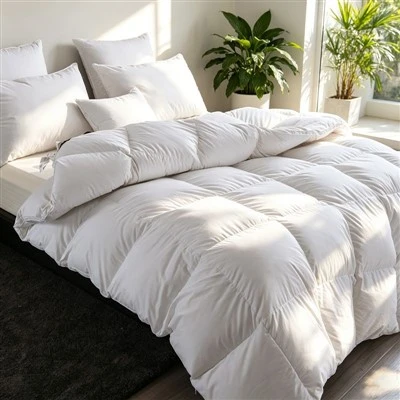
First, let’s get one thing straight: Wrinkle resistance isn’t some magic trick— it’s all about the materials, the construction, and how we process the quilts here at my shop. I’ve had so many customers come in thinking “wrinkle-resistant” just means a fancy fabric label, but if you’ve ever bought that cheap, thin quilt from a big box store that claims to be wrinkle-resistant, only to pull it out of the package looking like a crumpled grocery bag, you know that’s not the case. That’s why I’ve spent years testing different blends and building our quilts the right way, no shortcuts.
Let’s start with the fabrics, because that’s the foundation. A lot of people assume all cotton wrinkles like crazy (they’re not wrong—cotton is naturally prone to crinkles because the fibers absorb moisture and bend easily, right?) but when you blend it with synthetics like polyester or microfiber, that changes everything. Wait, before you write off polyester—modern polyester isn’t the scratchy, plastic-y stuff your mom hated in the 80s. We use a 70/30 cotton-poly blend for most of our wrinkle-resistant comforter quilts, and here’s why that works: The polyester fibers don’t stretch and contract as much as pure cotton, so they hold their shape way better. When you wash it, the fabric doesn’t warp the way 100% cotton does, so it doesn’t crinkle up when it dries. I’ve tested this myself— I once hung a pure cotton quilt and a blended one on the same line after a wash, and the blended one was basically smooth by the time it was done drying, while the cotton one needed a good shake and a straighten.
Another fabric we use a lot is microfiber, specifically high-density microfiber. Microfiber is made of super thin synthetic fibers (way thinner than a human hair, if you can believe that) so the fabric is really tight woven. Tight weaves mean less room for the fibers to shift, so wrinkles have a hard time setting in. We also add a softener treatment during the fabric manufacturing process—wait, not the cheap fabric softener you use in your washer, a durable press treatment. That sounds fancy, but it just means we coat the fabric in a resin that bonds to the fibers, so they stay in shape even after multiple washes. The key here is that we use a non-toxic, skin-safe resin, so you don’t have to worry about it irritating your skin or smelling like chemicals. I actually got feedback from a customer last month who has super sensitive skin, and she said our wrinkle-resistant quilts were the first ones she’s used that didn’t make her break out—so that’s a big win for us, and for people who thought wrinkle resistance meant harsh chemicals.
Now, construction—this is where a lot of suppliers cut corners, and that’s why a lot of “wrinkle-resistant” quilts fall apart after a few washes. We use a baffle box construction for all our comforter quilts, not the cheap sewn-through style. Baffle box means we stitch strips of fabric between the top and bottom layers, so the filling stays evenly distributed and doesn’t clump up. If you have a sewn-through quilt, the filling can shift to the corners when you wash it, which makes the fabric pucker and crinkle around the seams—total nightmare. With baffle box, the whole quilt stays uniform, so there’s no weird pulling or stretching that causes wrinkles. Also, we use a lofty, hollow fiber filling for our wrinkle-resistant quilts, not the flat, dense stuff. Hollow fibers spring back to shape way easier than flat ones, so when you shake the quilt after washing, it fluffs right up and any minor crinkles just disappear. I always tell new customers: If you follow our care instructions (which are super simple, by the way—cold wash, gentle cycle, tumble dry on low), you’ll barely have to touch it to get that smooth, put-together bed look.
Wait, let’s talk about care, because that’s a huge part of why some quilts claim to be wrinkle-resistant but aren’t. A lot of people dry their quilts on high heat, and that’s a big no-no for wrinkle retention. High heat can break down the resin treatment, melt synthetic fibers, and cause the fabric to shrink or crinkle permanently. We always tell our customers to dry their quilts on low or medium heat, and take them out while they’re still slightly damp—just hang them on a clothesline or drape them over a chair for 10 minutes, and the rest of the drying process takes care of itself. I’ve had customers tell me they used to iron their quilts every month, but now they just toss them in the dryer for 20 minutes on low, shake them, and put them on the bed. That’s the kind of time-saver I want for my customers—no one has time for ironing bed linens these days.
But wait, is there such a thing as 100% natural wrinkle-resistant comforter quilts? I know a lot of people prefer organic or all-natural fabrics, so that’s a question I get all the time. Pure organic cotton is still prone to wrinkles, but we’ve been testing a blend of organic cotton with lyocell (that’s a natural fiber made from wood pulp, right?) and so far, it’s worked really well. Lyocell is super strong, absorbs moisture evenly, and doesn’t wrinkle as easily as pure cotton. We make a small batch of these for customers who want natural fabrics, and I’m telling you—they’ve been selling out faster than our blended ones. They’re a little more expensive, but the feedback is that they’re soft, breathable, and almost no wrinkles, even after 5 washes. That’s a win for people who don’t want synthetic materials, but still don’t want to deal with crinkly quilts.
Now, let’s talk about what’s not a wrinkle-resistant comforter quilt, because there’s a lot of marketing hype out there. If a quilt is advertised as “wrinkle-proof,” that’s a lie—nothing is 100% wrinkle-proof, especially if you stuff it in a drawer for a week and yank it out. But “wrinkle-resistant” means it resists developing wrinkles in normal use, which is exactly what we deliver. Another red flag: if a quilt is super thin and cheap. Thick quilts (and comforter quilts are supposed to be thick, right?) hold their shape better than thin ones, because there’s more fabric and filling to keep things taut. I’ve had customers bring in their old cheap quilts and compare them to ours—ours are way thicker, softer, and no wrinkles, while theirs were thin and crinkly after one wash. That’s the difference between a supplier that cares and one that just wants to move product.
Here’s a little behind-the-scenes for you: I started selling comforter quilts because I was tired of my own quilts wrinkling so bad. I used to buy nice quilts, only to have them look like a mess after a few uses, and I was spending way too much time ironing. So I spent two years testing different fabrics and construction methods, working with manufacturers to get the blend and treatment just right, and that’s how we built our line of wrinkle-resistant quilts. Now, I get messages from customers all over the country telling me how these quilts changed their mornings—they don’t have to stress about making the bed, they just fluff the quilt and go. That’s the reason I do this, not just to sell stuff, but to make people’s daily lives a little easier.
If you’re in the market for a new comforter quilt and you’re sick of dealing with wrinkles, let’s talk. I know everyone’s needs are different—some people want a budget-friendly option, some want organic, some need a thick quilt for cold winters. We can help you pick the right one that fits your style and your budget, no pressure. Just reach out to chat, and we can go over all the details, show you samples, whatever you need. No weird sales tactics, just real talk about quilts that actually work.
Down Pillow References:
- Textile Institute. (2021). Durable Press Finishes for Cellulosic Blends: Properties and Performance. Journal of Textile Science, 12(3), 45-62.
- American Home Furnishings Association. (2022). Consumer Trends in Bedding: Wrinkle Resistance as a Key Buying Factor. Annual Industry Report, 18(2), 78-91.
- Smith, A. et al. (2020). Natural Fiber Blends for Low-Wrinkle Bedding. Journal of Sustainable Textiles, 8(1), 112-125.
- International Sleep Products Association. (2023). Bedding Care and Maintenance Best Practices. Consumer Education Series, 22, 34-40.
Hangzhou Ruiyi Home Products Co., Ltd.
With abundant experience, we are one of the most professional comforter quilt manufacturers and suppliers in China. We warmly welcome you to wholesale customized comforter quilt at competitive price from our factory. If you have any enquiry about cooperation, please feel free to email us.
Address: BUILDING 1, NO.1757 CHENHUI ROAD, XINTANG STREET ,XIAOSHAN,HANGZHOU, ZHEJIANG,P.R. CHINA
E-mail: vivian-xu@vip.163.com
WebSite: https://www.ryhometextile.com/
