If you’ve ever stood next to a warehouse loading bay on a hot day where exhaust fans are humming away, or waited out a drafty basement that’s finally dry thanks to a ventilation system, you’ve experienced the quiet reliability of a centrifugal fan. As a centrifugal fan supplier, I’ve fielded hundreds of questions from facility managers, HVAC contractors, and industrial maintenance teams alike—none more common than: “What type of motor works best for this centrifugal fan setup?” Centrifugal Fan
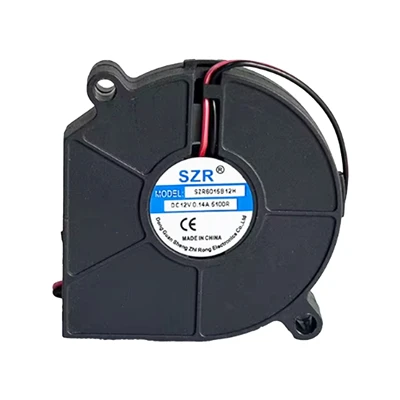
It’s not a trivial question, either. The motor is the beating heart of any centrifugal fan, and picking the wrong one doesn’t just mean a little extra noise or inefficiency. It can lead to premature breakdowns, higher energy bills, or even system failures that cost a business thousands in downtime. Over the past 12 years I’ve worked in this space, I’ve seen every bad call: a 50-horsepower AC induction motor paired with a centrifugal fan running on variable loads, burning out in 18 months instead of the 10-year lifespan it should have; a DC brushless motor forced to run 24/7 in a dusty manufacturing plant, with seals that failed because they weren’t built for the environment. Today, I’m breaking down what you actually need to consider when matching a motor to your centrifugal fan—no overly technical jargon, just real-world lessons from the job site.
First, let’s ground this in how centrifugal fans work, because that’s the base of every good decision. Unlike axial fans that push air straight down the axis of rotation, centrifugal fans pull air in from the front, spin it around a curved impeller housed in a scroll-shaped casing, and push it out at a right angle. That design gives centrifugal fans their power to move large volumes of air at high pressure, which is exactly why they’re used for everything from warehouse ventilation to industrial fume extraction to HVAC air handling units. But that power comes with a unique load profile: centrifugal fans are variable torque loads. What does that mean? The torque (the twisting force the motor needs to move the fan’s impeller) spikes when the fan is starting up, and most importantly, it increases with the square of the speed. So if you run the fan 20% faster, torque jumps 44%, and power needs go up 73%. That’s a key detail, because not all motors are built to handle that kind of torque curve efficiently.
Now, let’s go through the most common motor types for centrifugal fans, their pros, their cons, and the exact use cases where each makes sense.
The first, and still the most widely used in centrifugal fan applications, is the AC Induction Motor (ACIM). If you’ve ever walked past an industrial fan humming along at a factory, that’s almost certainly an AC induction motor. It’s the workhorse of the industrial world for good reason: it’s simple, robust, low-cost, and requires almost no regular maintenance beyond occasional bearing checks. For a centrifugal fan running at a fixed speed—like a constant exhaust fan in a small retail HVAC system, or a fume extraction unit for a steady-process metal shop—ACIMs are a no-brainer. But here’s the catch: standard ACIMs run at a fixed synchronous speed, so if your centrifugal fan needs to adjust airflow based on changing load (like an HVAC system that modulates for temperature, or a drying oven that needs less airflow once parts are dry), a fixed-speed ACIM paired with a throttle valve or damper is incredibly inefficient. That’s because the motor is working just as hard moving air as it is when the load is low, wasting huge amounts of energy. I’ve had customers come to me after switching from fixed-speed ACIMs to variable-speed drives (VSDs) on their ACIMs, cutting their fan energy bills by 30% in some cases. But even with a VSD, standard ACIMs have limits: they don’t handle very low speeds well, and can overheat if run at speeds below 20-25% of their rated speed for extended periods. That makes them a bad fit for centrifugal fans that need variable, low-speed operation consistently.
Next up is the Variable Frequency Drive (VFD) Integrated AC Induction Motor, often called an inverter-duty AC motor. This is an evolution of the standard ACIM, built to work seamlessly with VSDs (also called VFDs) without the overheating or performance issues of a standard motor. The design tweaks are small but critical: the wire insulation is thicker to handle the high-frequency voltage spikes from VSDs, the bearings are rated for variable speed operation, and the motor’s cooling fan is sized to work at lower speeds. For most mid-range centrifugal fan applications—think commercial HVAC air handlers, warehouse ventilation, and even small industrial process fans—this is our go-to recommendation at the supplier. Last year, we installed these on 120 centrifugal fans for a new distribution center’s ventilation system, and the maintenance team reported zero motor failures in the first 18 months, compared to the 10-12% failure rate we saw with standard ACIMs paired with VSDs on that same setup. The only downsides? They’re a bit more expensive upfront, and you do need to work with an electrician to size the VSD correctly for the fan and motor, because an undersized VSD will kill performance and an oversized one wastes money. I always tell contractors working with these to run a load calculation for the actual fan’s required torque, not just the motor’s rated horsepower.
Now, if you’re running a centrifugal fan in a more demanding environment—high dust, extreme temperatures, or a need for precise speed control that even inverter-duty AC can’t match—you might look at Permanent Magnet (PM) Motors, specifically Brushless Permanent Magnet (BPM) Motors. These motors use permanent magnets on the rotor instead of the copper windings that AC induction motors rely on. That makes them much more efficient across the entire speed range, not just at full load. I remember a customer in the chemical processing industry who was using centrifugal fans to vent corrosive fumes; their old inverter-duty AC motors were failing every 2 years because the fumes corroded the windings, and the VSDs were adding extra heat that accelerated the damage. We swapped in PM motors, rated for the specific ambient temperature and with corrosion-resistant coatings, and those fans have been running reliably for 5 years. The efficiency bump is a big win here too: PM motors can be 10-15% more efficient than inverter-duty AC motors at partial loads, which adds up fast for a fan running 24/7. The downside is that they’re significantly more expensive upfront—sometimes twice the cost of an inverter-duty AC motor—and if a PM motor does fail, repairing it is almost always more costly than fixing an AC motor. That makes them worth it only for high-cycle, high-load applications where the energy savings and long lifespan offset the initial cost.
Then there’s DC Motors, which used to be far more common in variable-speed centrifugal fans, but have been largely replaced by PM motors in most commercial and industrial setups. Traditional DC motors have brushes that wear out over time, requiring regular maintenance (brush replacement every 1-2 years for 24/7 operation), which is a non-starter for most applications where downtime is expensive. The only place I still regularly recommend DC motors is for small, low-power centrifugal fans in residential or light commercial applications, where the variable speed is minimal and the upfront cost is more important than long-term maintenance. For anything above 1 horsepower, PM motors or VFD-integrated AC motors are a better bet.
Wait, there’s one more motor type I can’t skip: Explosion-Proof (XP) Motors. If your centrifugal fan is moving flammable fumes, dust, or gases—like in a grain elevator, chemical plant, or oil and gas facility—standard motors are a fire hazard. Even a small spark from an unrated motor can ignite the materials your centrifugal fan is moving. Explosion-proof motors are built with sealed housings that can contain any internal spark, and are rated to operate safely in hazardous Class I, Division 1 or 2 areas. As a centrifugal fan supplier, we don’t cut corners on these. I’ve seen too many grain elevator fires that started because a cheap, unrated motor on a dust extraction centrifugal fan sparked and ignited the grain dust. If you’re working in a hazardous area, XP isn’t an option—it’s a requirement, and your motor has to be rated specifically for the type of hazard you’re dealing with.
Beyond the motor type, there are a handful of other factors that are just as important to get right, no matter which motor you pick. The first is matching the motor’s horsepower to the fan’s actual load. I can’t tell you how many times I’ve seen a customer buy a centrifugal fan with a 5-horsepower motor, when the fan only needs 3.5 horsepower to operate at its required airflow. Oversizing a motor might seem safe, but it’s one of the most inefficient things you can do. Motors have a sweet spot where they run at peak efficiency, usually around 75-100% of their rated load. If you run a 5HP motor at 3.5HP, it’s operating at less than 70% efficiency, wasting thousands of dollars in electricity over the life of the motor. The same goes for undersizing: if the motor can’t handle the fan’s peak torque when starting or at full load, it will overheat and burn out prematurely. Always run a fan load calculation, not just a rating based on the fan’s advertised size.
Second, ambient conditions matter more than most people realize. If your centrifugal fan is going to run in a 120°F steel mill, or a freezing cold outdoor loading bay, the motor has to be rated for that temperature range. Motors produce heat when they run, and if the ambient temperature is already high, that heat has nowhere to go, leading to overheating. For cold environments, lubricants in the motor’s bearings can thicken, making startup torque higher than the motor is rated for. We offer temperature-specific motor coatings and bearing upgrades for exactly these scenarios; last year, we shipped a set of centrifugal fans with cold-weather rated motors to a mining operation in northern Canada, and they’ve run without a hitch through winter temperatures that dropped to -40°F.
Third, maintenance requirements tie directly to motor choice. If you’re a small business owner with one centrifugal fan in a retail space, and you don’t have a full-time maintenance team, you want a motor that’s low-effort: inverter-duty AC or standard AC, with sealed bearings that only need grease every 5 years. If you’re a large industrial facility with a maintenance staff, you can handle more frequent checks, and the slightly higher upfront cost of a PM motor might be worth it for the efficiency. We always give customers a maintenance plan alongside their motor recommendation, so they know exactly what’s required to keep their centrifugal fan running, whether that’s quarterly bearing inspections or an annual winding check.
Let’s walk through a few real-world examples to tie all this together, because rules don’t mean much without context. Last quarter, we had two customers come to us with similar centrifugal fan needs, but very different setups. The first was a local restaurant chain, needing centrifugal fans for their commercial kitchen exhaust. The fans run about 8 hours a day, 5 days a week, in a moderate temperature environment, and only need to run at fixed speed (they adjust airflow with dampers as needed). We paired them with standard 1HP AC induction motors, which cost 20% less upfront, have almost no maintenance, and have a 10-year lifespan. The second customer was a large auto body shop, needing centrifugal fans for paint booth ventilation. Those fans run 24/7, need precise airflow control to keep paint fumes at safe levels, and operate in a space where temperatures swing from 60°F to 90°F daily, with occasional high dust from sanding. We recommended 5HP inverter-duty AC motors paired with VFDs, which give them the variable speed control they need, are efficient at partial loads, and have sealed bearings that handle the dusty environment. Both customers were happy with the setup, because we matched the motor to their specific needs, not just a one-size-fits-all recommendation.
If there’s one takeaway I want you to remember, it’s this: there is no single “best” motor for every centrifugal fan. The right motor depends on your fan’s load profile, operating environment, required speed control, and maintenance capacity. As a centrifugal fan supplier, our job isn’t just to sell you a fan and a motor—it’s to help you pick the combination that will be reliable, efficient, and cost-effective for the long haul.
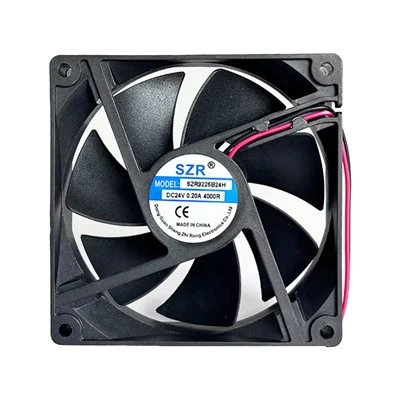
If you’re currently dealing with a centrifugal fan that’s underperforming, burning out motors early, or costing too much to run, we’d be happy to help you work through the details. Reach out to our team to discuss your setup, and we can walk you through the right motor options for your specific application, no pressure, no complicated fine print.
Industrial Cooling Fan References
- EC&M Electrical Maintenance and Construction. “Choosing the Right Motor for Your Industrial Fan Application.” 2022.
- Air Movement and Control Association (AMCA). Standard 99-20, “Fan Application Guidelines for Industrial Ventilation.” 2021.
- National Fire Protection Association (NFPA). Standard 70, “National Electrical Code, Article 500: Hazardous (Classified) Locations.” 2023.
- U.S. Department of Energy. “Motor Challenge: Centrifugal Fan Motor Efficiency.” 2020.
Dongguan Shengzhirong Electronics Co., Ltd.
As one of the most professional centrifugal fan manufacturers and suppliers in China, our products have good reputation in the market. Please rest assured to wholesale high quality centrifugal fan made in China here from our factory. Customized orders are welcome.
Address: 6/F, Building 2, No.68, Shunxing 2nd Road, Dajingtou 2nd Industrial Zone, Dalang Town, Dongguan City, Guangdong, China
E-mail: szr_coolingfan@163.com
WebSite: https://www.szrfan.com/
