Chassis trucks, also known as semi – trailers or flatbed trailers in some contexts, are essential workhorses in the transportation and logistics industry. These vehicles are designed to carry heavy loads and are often used in long – distance hauling, construction, and other industries that require the movement of large and bulky items. One of the key components that can greatly enhance the efficiency and safety of operating a chassis truck is the navigation system. In this blog, as a chassis truck supplier, I’ll share some insights on how to use the navigation system in a chassis truck effectively. Chassis Truck

Understanding the Basics of the Navigation System
Before you can start using the navigation system, it’s crucial to understand its basic functions. Most modern navigation systems in chassis trucks are equipped with a touch – screen interface, which makes it relatively easy to operate. The main functions typically include map viewing, route planning, and real – time traffic information.
The map viewing function provides you with a visual representation of the area you are traveling in. You can zoom in and out to get a better view of the roads, landmarks, and your current location. Route planning allows you to enter your destination, and the system will calculate the best route for you. It takes into account various factors such as distance, traffic conditions, and road restrictions. Real – time traffic information is extremely useful as it can alert you to traffic jams, road closures, and other obstacles in advance, allowing you to adjust your route accordingly.
Initial Setup
When you first get a new chassis truck with a navigation system, the initial setup is a necessary step. Start by turning on the navigation system and following the on – screen prompts. You may need to select your language, set the date and time, and calibrate the GPS receiver.
Calibrating the GPS receiver is important to ensure accurate location tracking. This usually involves waiting for the system to acquire a signal from multiple satellites. In an open area, it may take a few minutes for the system to lock in the satellites. Once the calibration is complete, the navigation system will be able to accurately determine your position on the map.
Entering a Destination
Entering a destination is one of the most common operations you’ll perform on the navigation system. There are several ways to do this. You can enter the exact street address, including the street name, house number, and city. The system will then search its database for the location and display it on the map.
If you don’t have the exact address, you can also enter a point of interest (POI). Points of interest can include landmarks such as shopping malls, restaurants, gas stations, and hotels. For example, if you’re looking for a place to refuel your chassis truck, you can search for "gas stations" in the POI section. The system will then show you the nearby gas stations on the map and provide directions to the selected one.
Another option is to use the "favorites" function. You can save frequently visited locations, such as your company’s warehouse or a regular customer’s site, as favorites. This makes it quicker to enter these destinations in the future. To add a location to your favorites, simply find the location on the map, select the option to add it to favorites, and give it a name.
Route Selection and Optimization
Once you’ve entered your destination, the navigation system will calculate multiple possible routes. It will usually display at least three options: the shortest route, the fastest route, and a more scenic route (if available).
The shortest route is based on the actual distance between your current location and the destination. However, it may not always be the fastest, especially if it passes through areas with heavy traffic or narrow roads. The fastest route takes into account real – time traffic information and road conditions to estimate the shortest travel time. This is often the most practical choice for commercial chassis truck drivers who want to save time and fuel.
When the system presents you with the route options, you can review each one. Some navigation systems allow you to view a detailed breakdown of the route, including the estimated travel time, distance, and any major intersections or toll roads along the way. You also have the option to customize the route. For example, you can avoid toll roads if your company has a policy against using them, or you can avoid highways if you prefer to take a more direct local route.
Real – Time Monitoring and Adjustments
Once you start driving, the navigation system will continuously monitor your progress along the route. It will show your current position on the map and provide voice prompts to guide you at each turn. Make sure to adjust the volume of the voice prompts according to your preference.
The real – time traffic information feature is invaluable during your journey. If there’s a traffic jam ahead, the system will automatically suggest an alternative route. You can choose to follow the new route or continue on the original one. It’s important to stay alert and make an informed decision based on the situation. For example, if the alternative route adds significantly more distance but only saves a small amount of time, it may be better to stick with the original route.
In addition to traffic, the navigation system can also alert you to other important information, such as upcoming speed limits, sharp turns, and construction zones. Pay attention to these alerts to ensure your safety and compliance with traffic regulations.
Using Additional Features
Many navigation systems in chassis trucks come with additional features that can enhance your driving experience. One such feature is the ability to find parking spaces. This is especially useful when you need to take a break or when you arrive at your destination. The system can show you the nearby parking lots, including their availability and pricing if applicable.
Some navigation systems also integrate with your truck’s other systems. For example, they can be connected to your fuel gauge to calculate the remaining distance you can travel based on your current fuel level. This helps you plan your refueling stops more effectively.
Maintenance and Updates
To ensure the optimal performance of your navigation system, regular maintenance and updates are necessary. Check the system’s software regularly for updates. Manufacturers often release updates to improve the accuracy of the maps, add new points of interest, and enhance the overall functionality of the system. These updates can usually be downloaded via Wi – Fi or a USB connection.
Keep the touch – screen of the navigation system clean and free of scratches. A dirty or scratched screen can make it difficult to operate the system accurately. Use a soft, dry cloth to clean the screen, and avoid using abrasive materials.
Conclusion
Using the navigation system in a chassis truck can significantly improve the efficiency and safety of your operations. By understanding the basic functions, performing the initial setup correctly, entering destinations accurately, selecting optimal routes, monitoring your journey in real – time, and utilizing additional features, you can make the most of this valuable tool.
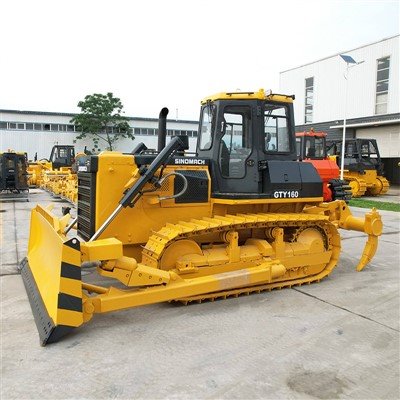
Bulldozer As a chassis truck supplier, we understand the importance of having a reliable navigation system in your vehicle. Whether you’re a small – scale hauler or a large – scale logistics provider, our chassis trucks are equipped with the latest navigation technology to meet your needs. If you’re interested in learning more about our chassis trucks and the navigation systems they come with, or if you’re considering purchasing a new chassis truck, we’d love to have a conversation with you. Contact us to start a procurement discussion, and let us help you find the perfect chassis truck solution for your business.
References
- Smith, J. (2020). "Advanced Navigation Systems in Commercial Vehicles." Transportation Research Journal.
- Johnson, A. (2021). "Optimizing Route Planning for Heavy – Duty Trucks." Logistics and Supply Chain Magazine.
- Brown, M. (2019). "The Future of Navigation in the Trucking Industry." Trucking World Today.
Jining Dafu Machinery Sales Co., Ltd.
As one of the most professional chassis truck suppliers in China, we’re featured by quality products and low price. Please rest assured to wholesale bulk cheap chassis truck from our factory. We also accept customized orders.
Address: Room 1-115, Building 7, Luxinan Auto Parts City, Qiantongdian Village, Quanpu Town, Liangshan County, Jining City, Shandong Province
E-mail: jiningdafu@163.com
WebSite: https://www.dafumachinery.com/
