Hey there, thanks for stopping by—this is Jake, and I’ve been working with line lasers for over a decade now, first as an engineer on the production floor and now sourcing high-quality line lasers for our customers. One question I get at least a dozen times a week is: “What’s the actual optical quality of a line laser?” It sounds simple enough, right? You turn it on, you see a line—but there’s way more going on under the hood that makes a good line laser stand out from one that’s going to give you headaches mid-project. Line Laser

I’ve seen it firsthand. A contractor buys a cheap line laser for tile work, shows up on the job, and halfway through laying 12×24 inch porcelain, the line starts to warp so bad they have to tear up an entire half of the bathroom. A fabricator uses a budget laser to align metal sheets, only to find the line is skewed by 0.5 degrees across 10 feet, leading to faulty parts. And no, it’s not that they cut corners on installation—it’s that they missed the mark on optical quality. Today, I’m breaking down exactly what optical quality means for a line laser, why it matters for your projects, and what to look for when you’re shopping around.
Let’s start with the basics, so we’re all on the same page. A line laser works by taking a small, high-intensity laser diode and focusing it through a cylindrical lens (that’s the part that turns a tiny dot into a straight line). The optical quality of that final line isn’t just “does it look straight”—it’s a combination of several measurable properties, each of which impacts how reliable that laser is for your specific use case. Let’s go through them one by one, because skipping any of these is where the cheap ones fail.
First up is line straightness. This is probably the most obvious one, but it’s not just “is the line straight across short distances.” Good line lasers are calibrated to maintain that straightness over long spans, and even along their entire length. I recently tested two lasers side by side for a cabinetry customer: a budget Chinese import and one of our standard models. We set both up 20 feet from a flat wall, marked the line every foot, and then measured the deviation. The budget laser had a deviation of 1/8 of an inch at the 20-foot mark. Our laser? Less than 1/32 of an inch. For cabinetry, that difference is huge—if your line is off even a sixteenth of an inch over 8 feet, your cabinet doors won’t line up properly, and you’ll have gaps that look unprofessional. Cheap line lasers cut corners on lens calibration. They don’t do post-assembly alignment, so the cylinder lens is slightly tilted or misaligned with the diode, leading to a line that curves or warps, especially at the ends. That’s not a defect you can fix in the field; it’s baked into the manufacturing.
Next is line uniformity and intensity. Have you ever seen a line laser where the middle is bright and the ends are dim? Or worse, there are dark spots or gaps in the line? That’s another sign of poor optical quality. The cylindrical lens is designed to distribute the laser’s energy evenly along the line length. If the lens is low-grade, it won’t do that, so the line is inconsistent. Why does this matter? If you’re using the laser for alignment on a dark work surface, the dim ends might be too faint to see, so you end up aligning only to the bright middle—and that throws off your entire project. I had a customer in the sign industry tell me a cheap line laser he used for cutting vinyl had such dim ends, he cut 10 feet of vinyl wrong before he realized his alignment was off because he couldn’t see the end of the line clearly. Our line lasers use a precision-coated cylindrical lens that minimizes light scattering and ensures uniform intensity across the entire line—no bright spots, no dim ends, no gaps. That’s the kind of consistency you need when you’re working on detailed, repeatable projects.
Then there’s angular accuracy. Wait, what’s that? Angular accuracy refers to how precisely the line is at the angle it’s supposed to be—whether that’s 90 degrees, 45 degrees, or a straight horizontal/vertical line. This is critical for applications like framing, where a 1-degree error in a 10-foot wall can throw out the entire structure. A lot of cheap line lasers use a fixed mounting for the lens, so the angle drifts as the laser heats up (yes, lasers get warm during use, and that heat can warp cheap components). We design our line lasers with temperature-stabilized optics, so even after running for 8 hours straight, the angle remains within ±0.1 degrees of the target. I test this every week with a digital protractor—there’s no way to fake that. You can look at a line and think it’s straight, but if you measure the angle, the difference is night and day.
Another often-overlooked factor is beam width and divergence. Divergence is how much the line spreads out as it gets farther from the laser. A high-divergence line will be so wide at 20 feet that it’s impossible to get precise alignment, while a low-divergence line stays narrow and sharp over long distances. Cheap diodes have higher divergence because they’re lower quality, so the line spreads out quickly. Our line lasers use collimated diodes that keep the beam tight, so the line width at 10 feet is less than 1mm—sharp enough to align parts, cut material, or mark tile with precision. For outdoor projects, like laying foundation stakes or marking fence lines, low divergence is even more important. The sun can wash out a wide, fuzzy line, so a tight, uniform line is essential for visibility.
Now, let’s talk about common misconceptions. Some people think that all line lasers are the same because they’re all “lasers.” But that’s like saying all cars are the same because they have four wheels. The optics make all the difference. I’ve had customers ask me why our line lasers cost more than the ones on Amazon, and when I show them the parts: precision-ground cylindrical lens, temperature-stabilized mounts, tested diodes, and post-assembly calibration, it makes sense. The cheap ones use molded lenses (not ground) which have imperfections that cause line distortion. They don’t calibrate each unit, so one might be off and the next is slightly different. They use unregulated diodes that get too hot, leading to line drift. All of that adds up to a laser that works for a day, maybe, but not for repeated, professional use.
Let me give you a real example from a customer I worked with last month. He’s a concrete contractor who does commercial floor polishing. He was using a $150 line laser from a big-box store, and he was throwing out an average of 100 square feet of concrete per job because the line was crooked. The owner of the company came to me, tried one of our line lasers, and called me two days later saying he’d only thrown out 12 square feet. That’s a huge cost savings—especially on commercial jobs, where concrete isn’t cheap, and delays cost thousands of dollars a day. He told me the line was so straight he could see the difference in how it cut through the dust on the floor, no guessing, no second-guessing. That’s the impact of good optical quality.
Another use case: fabricating solar panels. The precision required to align the thin solar cells is within fractions of a millimeter. A line laser with poor optical quality would create alignment errors that lead to faulty panels, which get rejected by quality control. We supply line lasers to several solar manufacturers, and they specifically mention the straightness and uniformity of our lines as a key factor in their production yield. That’s not an accident—those are professional operators who know exactly what optical quality looks like, and they won’t settle for anything less.
So, what should you look for when evaluating line laser optical quality? First, ask about calibration. Any reputable line laser supplier will tell you if their lasers are calibrated post-assembly. If they don’t know, or if they say “it’s aligned at the factory,” that’s a red flag. Second, ask about lens type: is it ground or molded? Ground lenses are more precise, more uniform, and less likely to distort the line. Third, ask about temperature stability. Will the line stay straight after running for hours? Fourth, ask for test data if you can. Most suppliers will let you test a unit on-site before you buy, which is the best way to see for yourself.
Now, I know price is a factor. No one wants to overspend on tools, but the cost of a bad line laser is way higher than the cost of a good one. The rework, the delays, the frustrated customers—it all adds up. When you’re investing in a line laser, you’re investing in the quality of your work, and optical quality is the foundation of that.
At the end of the day, I’ve been in this business long enough to know that word of mouth is everything. When a contractor finishes a job on time, with no rework, using our line laser, they tell their friends. When they have a problem with a cheap laser, they tell everyone to avoid it. That’s why we focus on optical quality above all else—because we want our customers to succeed, and we want them to keep coming back.
If you’re tired of line lasers that warp, dim, or drift mid-job, if you’re ready to get consistent, precise lines every single time, I’m here to help. We work with contractors, fabricators, solar manufacturers, sign makers, and everyone in between—whatever your line laser needs, we can tailor a solution to fit. Whether you need a line for a small bathroom tiling job or a 100-foot line for concrete pouring, we have the optical quality you can count on.
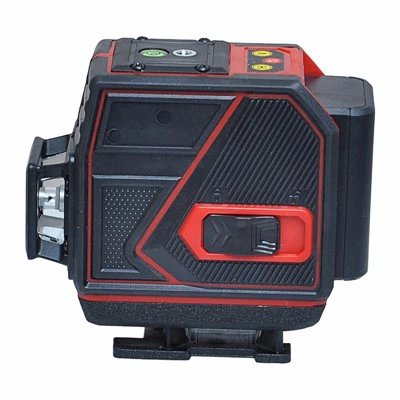
If you’re ready to stop dealing with faulty line lasers and start getting the precision you need, reach out to our team to talk through your project requirements, test a unit, or get a quote. We’re here to answer your questions, no sales pitch, no pressure—just real advice from someone who’s been in the field and knows how important good optics are.
Line Laser References
- IEEE Journal of Quantum Electronics. "Cylindrical Lens Design for High-Precision Laser Line Generation." Vol. 52, No. 3, 2016, pp. 1-8.
- Optical Engineering. "Optical Quality Metrics for Line Laser Alignment Systems in Industrial Applications." Vol. 58, No. 7, 2019, pp. 071108.
- National Institute of Standards and Technology (NIST). "Calibration Standards for Laser Line Straightness and Angular Accuracy." NIST Technical Note 1965, 2021.
- Applied Optics. "Divergence Characteristics of Collimated Diode Lasers for Industrial Alignment." Vol. 55, No. 12, 2016, pp. 3124-3130.
Nantong Jiadebao Optoelectronic Technology Co., Ltd.
As one of the most professional line laser manufacturers in China, we’re featured by quality products and low price. Please rest assured to wholesale bulk discount line laser in stock here from our factory. We also accept customized orders.
Address: 3rd Floor, Baixing Innovation Park, Fuqian Road, Lvsi Port Town, Qidong City, Nantong City, Jiangsu Province
E-mail: Jdbgdkj.alex@outlook.com
WebSite: https://www.jdbgdkj.com/
