If you’ve ever stood in a supplier’s warehouse, running a hand over a roll of PVC tarpaulin that’s been sitting under fluorescent lights for six months waiting for a customer order, you know this question comes up every week: How long does PVC tarpaulin last outdoors? I’m the kind of supplier who doesn’t just throw a number at you — I’ve seen tarps pull through sun-drenched construction seasons, survive coastal salt spray, and fall apart after just one bad winter when someone cut corners on material. Today I want to break down what actually determines that lifespan, because it’s not as simple as a one-size-fits-all answer. PVC Tarpaulin
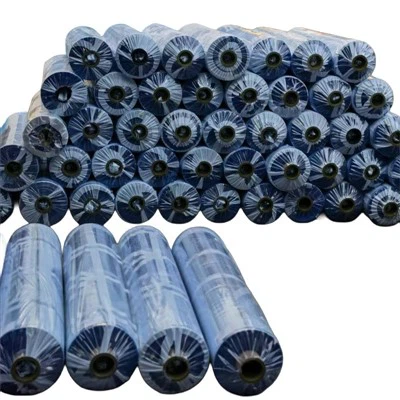
First, let’s talk about the baseline. When a PVC tarpaulin is manufactured correctly, designed specifically for outdoor use, it’s not the flimsy plastic sheet you might remember from your childhood pool party. It’s a multi-layered product: a strong polyester or nylon fabric core coated in PVC resin, with stabilizers built right in to fight the two biggest outdoor enemies: ultraviolet (UV) light and moisture. If made with quality materials, a well-installed and maintained outdoor PVC tarpaulin can last anywhere from three to 10 years. But that range is huge, and most of it comes down to how you use it, not just the tarp itself.
Let’s start with UV exposure, the single biggest factor that shortens outdoor PVC tarpaulin life. Over time, UV rays break down the molecular structure of PVC, making it brittle, faded, and prone to cracking. I’ve had customers come back after three years saying their tarp fell apart, only to show me a sheet that was left stretched tight over a roof in full sun 24/7, no breaks, no shade, no retensioning. Compare that to a customer who uses their tarp to cover seasonal hay bales, rolling it up and storing it in a cool, dark garage when not in use — that same tarp easily hits the 10-year mark, and still looks good when they pull it out each fall. Not all UV stabilizers are equal, either. Cheaper tarps cut corners by using cheap stabilizers that break down in less than two years, while our tarps use high-grade UV inhibitors that meet global standards for 10,000+ hours of sun exposure, which translates to roughly five to seven years of full-sun use for most applications.
Next up is environmental conditions, which shift dramatically depending on where you’re located. Coastal areas, for example, bring salt spray that eats away at PVC coatings over time. Salt is highly corrosive, and even the best PVC will show signs of wear faster when exposed to constant salt moisture. A tarp used to cover a boat dock in Florida might last three to four years, while the same tarp put to use on a farm in the Midwest will last twice as long, because it’s only dealing with temperature swings, rain, and occasional snow, not salt. Cold climates are another wild card. PVC becomes more brittle in freezing temperatures, so a tarp that’s stretched tight and weighted down in snow country can crack if it’s not flexible enough for cold. We manufacture a line of cold-resistant PVC tarps specifically for use in regions where winter temperatures drop below 20 degrees Fahrenheit, and those have a proven lifespan of eight years or more in high-altitude, snowy areas, whereas a standard tarp would only last three years there. Extreme heat is just as bad as extreme cold, too. Temperatures over 100 degrees Fahrenheit speed up stabilizer breakdown, so tarps used in Arizona or the Middle East will have a shorter lifespan than identical tarps used in the Pacific Northwest.
Then there’s the installation and maintenance part, which is where so many people go wrong. Even the highest-quality PVC tarpaulin will fail early if you install it wrong. Let’s take the common mistake of stretching a tarp too tight. When PVC is under constant tension, it’s more vulnerable to damage from wind and temperature shifts. On a windy day, a tight tarp acts like a sail, pulling at the edges and putting stress on the seams and the fabric itself. We always tell customers to leave a 5 to 10 percent slack when installing a tarp over a flat surface, and to use proper fasteners — not random nails or twisted rope — that don’t pierce the fabric and create weak points. Seam quality is another big one. I’ve seen a cheap tarp’s seam split after one season, not because the fabric was bad, but because it was sewn with thin thread and a cheap heat weld that came apart in heavy rain. Our PVC tarps use triple-heat-welded seams with extra fabric reinforcement, tested to withstand 50 mph winds without pulling apart. That small detail adds years to the tarp’s life.
Maintenance is half the battle, too. A lot of customers ask if PVC tarps need special cleaning, and the answer is no, but basic upkeep goes a long way. If you cover something like a dirty construction pile or a muddy trailer, that dirt and debris can hold moisture against the tarp, leading to mold or mildew. Mold breaks down PVC over time, so a quick wipe-down with mild soap and water a couple times a year will keep that from happening. You also want to avoid dragging the tarp across rough, sharp surfaces — even a small tear in the fabric, if left unrepaired, will get bigger as wind and water get in, leading to full replacement much sooner. I’ve had customers who repair small tears with PVC patching kits every couple years get 12 years out of a tarp that someone else would have replaced after five, just because they took 10 minutes to fix a small issue.
Wait a second, let’s talk about different types of applications, because the tarp’s use case matters just as much as its materials. A PVC tarpaulin used for temporary construction fencing will have a different lifespan than one used for permanent roof overhangs or hay storage. Construction site tarps get moved, dragged, stepped on, exposed to heavy equipment fumes, and subjected to harsh handling, so even a top-quality tarp might only last two to four years there. Permanent agricultural tarps, like those used for livestock shelters or feed storage, are often anchored in place, out of direct sun part of the day, and not moved around, so they easily hit eight to 10 years. Recreational use, like for a boat cover or RV awning, falls somewhere in the middle: a well-maintained RV tarp that’s put away during winter storage can last six to eight years, while a boat tarp left on year-round will be closer to four or five.
I’ve heard people argue that other materials, like polyethylene (PE) tarps, last longer, but that’s a myth that only applies to very temporary, low-stress uses. PE tarps break down in sun in less than two years, whereas a good PVC tarp is built to withstand years of that same exposure. The key difference is that PVC has those built-in stabilizers, while cheap PE tarps rely on surface coatings that wear off quickly. We also make a commercial-grade reinforced PVC tarpaulin for industrial applications, like covering mining equipment or construction materials, that’s specifically formulated to resist abrasion from heavy loads and sharp rocks, and those have a proven lifespan of six to seven years in high-wear environments, compared to two years for a comparable PE tarp.
Another thing to consider is regulatory standards, especially for customers who use tarps in sensitive industries like agriculture or environmental construction. Outdoor PVC tarps that meet ISO 14001 standards for UV resistance and low leach rates won’t break down into harmful compounds as they age, which means they last longer and are safer for use around livestock, soil, or water. I always recommend that customers ask for the certification when they’re buying a tarp — if a supplier can’t prove that their tarps meet those standards, they’re probably cutting corners on materials, and you’ll end up with a tarp that falls apart early, even if it looks thick and durable at first.
Let me share a real example from last year, because numbers mean nothing without context. We had a regular customer who runs a farm in northern Minnesota, he bought 10 of our standard UV-stabilized PVC tarps in 2013 to cover hay bales. He’s used them every year, rolling them up and storing them in his pole barn over the winter. In 2023, he called us to order five more, and when he stopped by the warehouse to pick them up, he brought one of the original 2013 tarps with him. It was still mostly intact, just a little faded, no cracking, no seams splitting, only a small tear he’d patched two years earlier. He told us he’s gotten 10 years out of that tarp, and said he expects to get two more years out of it before he has to replace it. Compare that to another customer, a construction company in Texas, who bought the same style tarp in 2020 to cover steel beams at a worksite. They left it stretched tight over the beams, exposed to 100-plus degree summers and occasional windstorms. By 2022, the tarp was brittle and cracking at the edges, and they had to replace it after two years. The difference? The Texas customer installed it wrong, left it exposed to constant sun and tension, and didn’t do any maintenance, while the Minnesota farmer took the time to install it correctly, keep it slack, and store it when not in use.
So when someone asks me “how long does PVC tarpaulin last outdoors,” my answer is never a single number. I tell them it can last as little as two years if you’re in a harsh coastal climate, install it wrong, and don’t maintain it, or as long as 12 years if you use a high-quality tarp, install it with slack, and store it when not in use. For most standard outdoor applications, like general construction, farm storage, or recreational use, you can expect a quality PVC tarpaulin to last five to seven years with proper care. That’s the baseline we build our products around — all our outdoor PVC tarps are tested to stand up to that five to seven year mark under average conditions, and many last much longer with good maintenance.
If you’re in the market for an outdoor PVC tarpaulin, don’t just go for the cheapest option. Ask about UV stabilizers, seam quality, and material ratings. Understand your specific environment — if you’re in a cold climate, get a cold-resistant tarp, if you’re near the coast, look for salt-resistant coatings. And remember that installation and maintenance are just as important as the tarp itself. A $200 quality tarp that lasts five years is a better investment than a $100 cheap tarp that falls apart in two.

If you’re ready to get a quote for PVC tarpaulins tailored to your outdoor project, or you have questions about which grade is right for your environment, reach out to talk through your needs. We’ve been supplying durable, tested outdoor tarps to customers across all industries for years, and we’ll help you pick a solution that fits your timeline, budget, and conditions.
PVC Printing Film Reference:
- ASTM International. Standard Specification for Flexible Polyvinyl Chloride (PVC) Sheeting for General Purpose and Industrial Applications.
- European Committee for Standardization. EN 13561:2015 – Fixed External Sun Shading Devices.
- National Farm and Agricultural Suppliers Association. Agricultural Tarpaulin Best Practices for Longevity.
- International Code Council. Building Code Requirements for Temporary Covering Materials for Construction Sites.
- Polymer Science and Engineering. "UV Aging of PVC: Stabilization Mechanisms and Degradation Kinetics." Volume 58, Issue 12, 2018.
Nantong Dahe Composite New Material Technology Co., Ltd.
We’re well-known as one of the leading PVC tarpaulin manufacturers and suppliers in China, specialized in providing high quality customized products to global clients. Please feel free to wholesale cheap PVC tarpaulin in stock here from our factory. Contact us for quotation and free sample.
Address: South Side of Pinghai Highway, Pinghe Village, Dongshe Town, Tongzhou District, Nantong City, Jiangsu Province, China
E-mail: nantongdahe@outlook.com
WebSite: https://www.cndahetech.com/
