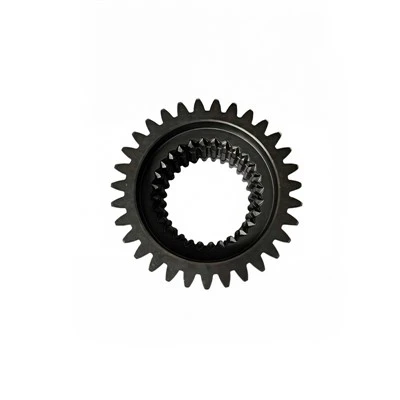
Hey there! As a gear supplier, I’ve seen firsthand where gears are commonly used. Gears are those nifty little (or sometimes big) mechanical components with teeth that mesh together to transmit power and motion. They’re everywhere, and in this blog, I’m gonna take you through some of the most common places you’ll find them. Gear
Automotive Industry
Let’s start with the automotive world. If you’ve ever driven a car, you’ve interacted with gears, even if you didn’t realize it. In a manual transmission vehicle, the gearbox is the heart of the operation. You’ve got the clutch that disengages the engine from the transmission, allowing you to shift gears. The gears in a manual gearbox come in different sizes and ratios. For example, first gear is usually a low – ratio gear, which means it provides more torque but lower speed. This is great for getting the car moving from a standstill. As you shift up to higher gears like third, fourth, or fifth, the ratios change to allow for higher speeds with less torque.
Even in automatic transmissions, gears play a crucial role. Modern automatic transmissions can have anywhere from 4 to 10 gears or more. These transmissions use a complex system of planetary gears, hydraulic systems, and sensors to automatically shift gears based on factors like vehicle speed, engine load, and throttle position. And it’s not just cars; trucks, motorcycles, and even some electric vehicles use gears (although electric cars often have fewer gears because electric motors can provide a wide range of torque at different speeds).
Industrial Machinery
In the industrial setting, gears are used in all sorts of machinery. Take conveyor belts, for instance. Conveyor belts are used in factories to move products from one place to another. Gears are used to drive the conveyor belt, controlling its speed and direction. They can also be used to change the speed of the belt, depending on the production requirements.
Another common use is in manufacturing machines like lathes and mills. These machines use gears to control the rotation speed of the cutting tools. By changing the gear ratio, operators can adjust the speed of the tool to match the material being cut and the desired finish. Industrial robots also rely on gears. The joints in robotic arms use gears to provide precise movement and control. This allows the robots to perform tasks like welding, painting, and assembly with high accuracy.
Aerospace Industry
The aerospace industry is another area where gears are essential. In aircraft engines, gears are used in the accessory drive system. This system powers various components of the engine, such as the fuel pump, oil pump, and generator. The gears in these systems need to be extremely reliable and durable because any failure could have catastrophic consequences.
In helicopters, the main rotor gearbox is a critical component. It takes the power from the engine and transfers it to the main rotor blades, allowing the helicopter to lift off and fly. The gearbox in a helicopter has to handle high loads and operate at high speeds, so it’s designed with special materials and advanced manufacturing techniques to ensure its performance and safety.
Marine Applications
On ships and boats, gears are used in propulsion systems. For larger vessels, the main engine’s power is often transferred to the propeller through a gearbox. The gearbox allows the engine to operate at its most efficient speed while providing the appropriate amount of torque to the propeller. This is important for long – distance travel and for reducing fuel consumption.
Smaller boats may also use gears in their outboard motors or in their steering systems. Gears can help convert the rotational motion of the steering wheel into the horizontal movement of the rudder, allowing the boat to turn smoothly.
Consumer Goods
Gears are also found in everyday consumer goods. Clocks and watches are classic examples. Inside an analog clock or watch, a series of gears work together to move the hands at the correct speed. The gears are carefully calibrated to ensure that the second hand moves once per second, the minute hand moves once per minute, and the hour hand moves once per hour.
Bicycles use gears too. Most modern bicycles have multiple gears that can be shifted using a derailleur system. The gears on a bicycle allow the rider to adjust the amount of effort required to pedal, depending on the terrain. For example, when going uphill, you can shift to a lower gear to make pedaling easier, while on flat roads or downhill, you can shift to a higher gear for more speed.
Medical Equipment
In the medical field, gears are used in a variety of equipment. Surgical robots, for example, use gears to provide precise movement and control. These robots allow surgeons to perform minimally invasive procedures with greater accuracy. The gears in surgical robots are designed to be extremely precise and reliable, as any small error could have serious consequences for the patient.
Dental drills also use gears. The gears in a dental drill are used to increase the speed of the drill bit, allowing dentists to quickly and effectively remove decayed tooth material. The high – speed rotation of the drill bit is made possible by the use of gears in the drill’s mechanism.
Renewable Energy
In the renewable energy sector, gears are important in wind turbines. A wind turbine’s gearbox is used to increase the low – speed rotation of the blades (usually around 10 – 20 revolutions per minute) to a high – speed rotation (around 1,000 – 1,800 revolutions per minute) that can drive the generator. This is necessary because most generators operate most efficiently at high speeds. However, designing and maintaining the gearbox in a wind turbine is a challenge because it has to withstand high loads, variable wind conditions, and long – term use.
Why Choose Our Gears?
Now that you know where gears are commonly used, you might be wondering why you should choose our gears as your supplier. Well, first of all, we have a wide range of gears available. Whether you need small, precision gears for a watch or large, heavy – duty gears for an industrial machine, we’ve got you covered.
Our gears are made from high – quality materials. We use advanced manufacturing techniques to ensure that our gears are strong, durable, and have a long service life. We also pay close attention to the quality control process. Every gear that leaves our factory is thoroughly inspected to make sure it meets the highest standards.
In addition, we offer excellent customer service. If you have any questions about our gears, need help with installation or maintenance, or just want to discuss your specific requirements, our team of experts is always here to assist you.
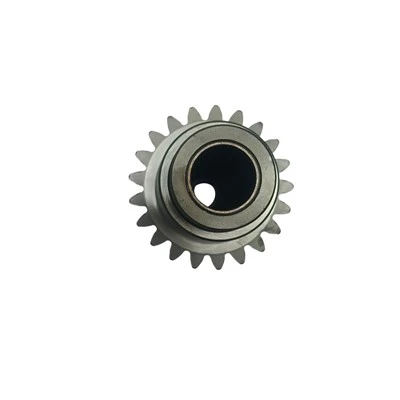
Transmission Shaft If you’re in the market for gears for any of the applications I’ve mentioned above or for something else entirely, I’d love to hear from you. We can work together to find the right gears for your needs, whether you’re a large corporation looking to outfit a whole factory or a small hobbyist working on a DIY project. Just reach out to start a discussion about your procurement needs, and we’ll take it from there.
References
- "Mechanical Engineering Design" by Joseph Edward Shigley, Charles R. Mischke, and Richard G. Budynas
- "Automotive Engineering: Fundamentals, Modeling, and Control" by Giuseppe Genta and Mario Campanile
- "Aerospace Engineering: Design and Flight Mechanics" by John A. Noble and Gareth Padfield
- "Marine Engineering: Principles, Practices and Applications" by John Vassalos and Ashraf Fahmy
Yancheng Botu Transmission Machinery Co., Ltd.
As one of the most professional gear manufacturers and suppliers in China, we have world-leading production equipment and strong manufacturing capabilities. Please rest assured to wholesale cheap gear for sale here from our factory. Contact us for more details.
Address: No. 33, Yongxing Road, Economic Development Zone, Jianhu County, Yancheng City, Jiangsu Province
E-mail: 15261979878@163.com
WebSite: https://www.ycbtcdjx.com/
