In the era of rapid technological advancement, healthcare service robots have emerged as a revolutionary force in the healthcare industry. As a prominent supplier of healthcare service robots, we are at the forefront of developing and providing these intelligent machines that are transforming the way healthcare is delivered. One of the key aspects that enhance the functionality and usability of these robots is their language support features. In this blog, we will explore the various language support features of our healthcare service robots and how they benefit both patients and healthcare providers. Healthcare Service Robots

Multilingual Communication
One of the most significant language support features of our healthcare service robots is their ability to communicate in multiple languages. In today’s multicultural society, patients come from diverse backgrounds, speaking a wide range of languages. Our robots are equipped with advanced language processing capabilities that allow them to understand and respond to patients in their native languages. This feature is particularly crucial in healthcare settings, as it ensures effective communication between patients and healthcare providers, reducing the risk of misunderstandings and improving the overall quality of care.
For example, in a hospital where patients from different countries are being treated, our robots can interact with patients in languages such as English, Spanish, Mandarin, French, Arabic, and many others. Whether it’s providing information about their treatment, answering questions, or offering emotional support, our robots can do it all in the patient’s preferred language. This not only enhances the patient experience but also helps to build trust and rapport between the patient and the healthcare team.
Voice Recognition and Synthesis
Voice recognition and synthesis are essential components of our healthcare service robots’ language support features. These technologies enable the robots to understand spoken words and convert them into text, as well as generate human-like voices to communicate with patients. Our robots are equipped with state-of-the-art voice recognition systems that can accurately recognize speech in various accents and languages, even in noisy environments.
When a patient speaks to the robot, the voice recognition system captures the audio input and converts it into text. The robot then processes the text using natural language processing algorithms to understand the patient’s intent and respond appropriately. On the other hand, the voice synthesis technology allows the robot to generate high-quality, natural-sounding voices to communicate with patients. Our robots can speak in different tones and accents, depending on the context and the patient’s preferences.
This combination of voice recognition and synthesis enables seamless and intuitive communication between patients and the robots. Patients can easily interact with the robots using their voices, without the need for complex input methods. This is particularly beneficial for patients who may have limited mobility or difficulty using other forms of communication.
Natural Language Processing
Natural language processing (NLP) is a field of computer science that focuses on enabling computers to understand, interpret, and generate human language. Our healthcare service robots are powered by advanced NLP algorithms that allow them to process and analyze natural language input from patients. These algorithms can extract relevant information from the patient’s speech, such as symptoms, medical history, and preferences, and use it to provide personalized care and support.
For example, if a patient tells the robot that they are experiencing chest pain, the NLP algorithm can analyze the statement to determine the severity of the pain, the duration, and any associated symptoms. Based on this information, the robot can provide appropriate advice, such as recommending that the patient seek immediate medical attention or providing tips on how to manage the pain. The NLP algorithms can also handle more complex language tasks, such as answering medical questions, providing health education, and engaging in meaningful conversations with patients.
Customizable Language Modules
In addition to the standard language support features, our healthcare service robots offer customizable language modules. These modules allow healthcare providers to tailor the robot’s language capabilities to meet the specific needs of their patients and their organization. For example, a hospital may want to customize the robot’s language to include medical terminology specific to their specialty, or a long-term care facility may want to add phrases and prompts that are relevant to their residents.
Our customizable language modules are easy to use and can be updated and modified as needed. Healthcare providers can work with our team of experts to develop and implement the language modules that best suit their requirements. This ensures that the robots can provide the most accurate and relevant information to patients, based on their specific health needs and preferences.
Benefits of Language Support Features
The language support features of our healthcare service robots offer numerous benefits for both patients and healthcare providers. For patients, these features improve communication, enhance the patient experience, and increase access to healthcare services. By being able to communicate with the robots in their native language, patients can feel more comfortable and confident in seeking medical advice and support. This can lead to better health outcomes, as patients are more likely to follow through with their treatment plans and take an active role in managing their health.
For healthcare providers, the language support features of our robots help to streamline communication, improve efficiency, and reduce the workload on staff. The robots can handle routine tasks, such as answering patient questions, providing information about appointments, and reminding patients about their medications, freeing up healthcare providers to focus on more complex and critical aspects of patient care. In addition, the robots can provide valuable support to healthcare providers in a multilingual environment, ensuring that all patients receive the same level of care and attention, regardless of their language background.
Conclusion
In conclusion, the language support features of our healthcare service robots are a game-changer in the healthcare industry. These features enable seamless and effective communication between patients and healthcare providers, regardless of language barriers. By offering multilingual communication, voice recognition and synthesis, natural language processing, and customizable language modules, our robots are able to provide personalized care and support to patients from diverse backgrounds.
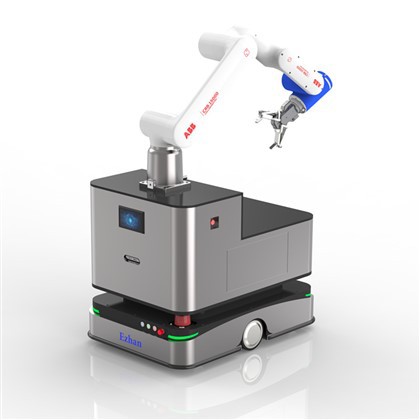
As a leading supplier of healthcare service robots, we are committed to continuously improving and innovating our language support features to meet the evolving needs of the healthcare industry. We believe that these features will play a crucial role in enhancing the quality of healthcare and improving the patient experience in the years to come.
Forklift Robot If you are interested in learning more about our healthcare service robots and their language support features, or if you would like to discuss a potential purchase and engage in a procurement discussion, please reach out to us. We are eager to share how our technology can benefit your healthcare organization.
References
- Jurafsky, D., & Martin, J. H. (2022). Speech and Language Processing. Pearson.
- Neumann, G., Peters, J., & Schaal, S. (Eds.). (2013). Robot Learning. MIT Press.
- Searle, J. R. (1980). Minds, brains, and programs. Behavioral and Brain Sciences, 3(3), 417-424.
Shenzhen Ezhan Technology Co., Ltd.
We’re known as one of the most reliable healthcare service robots manufacturers and suppliers in China. With abundant experience, we warmly welcome you to buy bulk customized healthcare service robots from our factory. If you have any enquiry about cooperation, please feel free to email us.
Address: Room 1808, 1809, 1810, Building 2, Aipark, Baolong 4th Road, Longgang District, Shenzhen City
E-mail: sales01@ezhankeji.com
WebSite: https://www.ezhanrobot.com/
