Partial discharge (PD) testing is a crucial aspect of assessing the insulation condition of electrical equipment. As a supplier of partial discharge testers, I understand the importance of helping our customers make informed decisions when comparing different models. In this blog, I will share some key factors to consider when evaluating various PD testers to ensure you select the most suitable one for your specific needs. Partial Discharge Tester
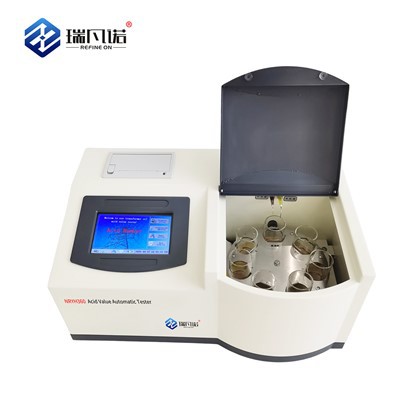
1. Measurement Accuracy
One of the primary considerations when comparing PD testers is measurement accuracy. The accuracy of a PD tester determines how precisely it can detect and quantify partial discharges. High – accuracy testers are essential for reliable assessment of insulation health.
When evaluating accuracy, look for specifications such as the minimum detectable partial discharge magnitude. A tester with a lower minimum detectable level can identify smaller PD events, which may be early indicators of insulation degradation. For example, some advanced models can detect PD as low as 1 pC, while others may have a minimum detectable level of 10 pC or higher.
Also, consider the accuracy of the measurement of PD parameters like the apparent charge, phase, and repetition rate. These parameters provide valuable information about the nature and severity of partial discharges. A tester with high accuracy in measuring these parameters will give you more reliable data for analysis.
2. Detection Methods
Different PD testers use various detection methods, and each method has its own advantages and limitations. The most common detection methods include electrical, acoustic, and optical methods.
Electrical Detection
Electrical detection is the most widely used method. It measures the electrical signals generated by partial discharges in the insulation. This method is highly sensitive and can detect PD in a wide range of applications, from high – voltage power transformers to switchgear. Electrical PD testers can be further classified into offline and online types. Offline testers are used when the equipment is out of service, while online testers can monitor PD continuously during normal operation.
Acoustic Detection
Acoustic detection measures the ultrasonic waves generated by partial discharges. It is useful for detecting PD in situations where electrical detection may be difficult, such as in sealed equipment or in the presence of high electromagnetic interference. Acoustic PD testers are often used in combination with electrical testers to provide a more comprehensive assessment of insulation condition.
Optical Detection
Optical detection is based on the light emissions associated with partial discharges. This method is relatively new and is mainly used in research and specialized applications. It can provide high – resolution information about the location and intensity of PD, but it is more expensive and less commonly used compared to electrical and acoustic methods.
When comparing different models, consider which detection method is most suitable for your application and whether the tester supports multiple detection methods for more comprehensive testing.
3. Frequency Range
The frequency range of a PD tester is another important factor. Partial discharges generate electrical signals over a wide frequency range, typically from a few kHz to several MHz. A tester with a wider frequency range can capture more information about the PD events.
For example, some high – frequency PD testers can detect PD signals in the MHz range, which may be associated with certain types of insulation defects. On the other hand, low – frequency testers are more suitable for detecting PD in large – scale electrical equipment where the PD signals are mainly in the kHz range.
When choosing a PD tester, consider the frequency characteristics of the equipment you are testing. If you are testing high – voltage equipment with fast – rising PD pulses, a tester with a high – frequency response may be necessary.
4. Portability and Ease of Use
In many cases, PD testing needs to be carried out on – site, so portability is an important consideration. A lightweight and compact PD tester is easier to transport and use in different locations.
Ease of use is also crucial, especially for non – technical users. Look for testers with user – friendly interfaces, clear displays, and simple operation procedures. Some modern PD testers come with touch – screen interfaces and built – in software for data analysis, which can significantly simplify the testing process.
For example, a tester with a built – in database for storing test results and generating reports can save time and effort in data management. It should also be easy to connect to the equipment under test, with clear instructions on how to set up the measurement system.
5. Data Analysis and Reporting
The ability to analyze and report the test data is an important feature of a PD tester. A good PD tester should provide comprehensive data analysis tools to help you interpret the test results.
Some testers offer built – in algorithms for analyzing PD patterns, such as phase – resolved partial discharge (PRPD) analysis. PRPD analysis can help identify different types of insulation defects based on the distribution of PD events over the voltage cycle.
In addition, the tester should be able to generate detailed reports that include test results, analysis conclusions, and recommendations. These reports are essential for communicating the insulation condition to relevant stakeholders, such as maintenance personnel and management.
6. Compatibility and Integration
When comparing PD testers, consider their compatibility with other equipment and systems. For example, if you already have a monitoring system in place, you may want a PD tester that can be integrated with it.
Some PD testers support communication protocols such as Modbus, Ethernet, or USB, which allow them to be connected to other devices for data transfer and remote monitoring. Compatibility with different types of sensors is also important, as it allows you to use the most suitable sensors for your application.
7. Cost
Cost is always a factor when making a purchasing decision. However, it is important to consider the cost in relation to the features and performance of the PD tester. A more expensive tester may offer higher accuracy, more advanced features, and better reliability, which can result in long – term cost savings by preventing equipment failures.
When comparing the cost of different models, consider not only the initial purchase price but also the cost of maintenance, calibration, and software updates. Some testers may require regular calibration, which can add to the overall cost of ownership.
8. Manufacturer Reputation and Support
The reputation of the manufacturer is an important consideration. A well – established manufacturer with a good track record is more likely to produce high – quality PD testers and provide reliable after – sales support.
Look for manufacturers that have a history of innovation and product development in the field of PD testing. They should also offer comprehensive technical support, including training, troubleshooting, and spare parts availability.
In conclusion, comparing different models of partial discharge testers requires a careful consideration of multiple factors, including measurement accuracy, detection methods, frequency range, portability, data analysis, compatibility, cost, and manufacturer reputation. By taking these factors into account, you can select the most suitable PD tester for your specific needs.
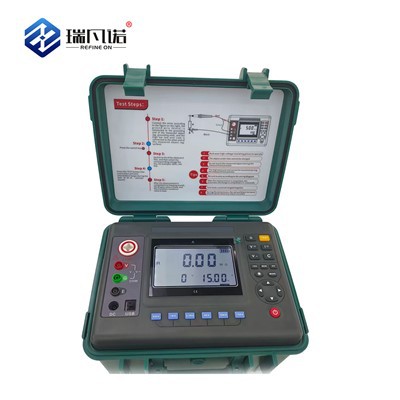
If you are in the market for a partial discharge tester and need more information or assistance in making a decision, please feel free to contact us. Our team of experts is ready to help you find the best solution for your insulation testing requirements.
Transformer Oil Tester References:
- Dissado, L. A., & Fothergill, J. C. (1992). Electrical Degradation and Breakdown in Polymers. Peter Peregrinus Ltd.
- Les Rencontres de la Me´trologie des D´e´charges Partielles (2004). Proceedings of the International Workshop on Partial Discharge Measurement.
- von Hippel, A. R. (1954). Dielectrics and Waves. John Wiley & Sons.
Refine On (Hebei) Electric Power Technology Co., Ltd.
Refine On (Hebei) Electric Power Technology Co., Ltd. is one of the most reliable partial discharge tester manufacturers and suppliers in China, also supports customized service. Please feel free to wholesale advanced partial discharge tester at competitive price from our factory. Contact us for quotation.
Address: Building 13, Liandong U Valley, No.64, Jing SAN South Street, Economic Development Zone, Mancheng District, Baoding City, China
E-mail: victor@transformer-test.com
WebSite: https://www.transformer-test.com/
